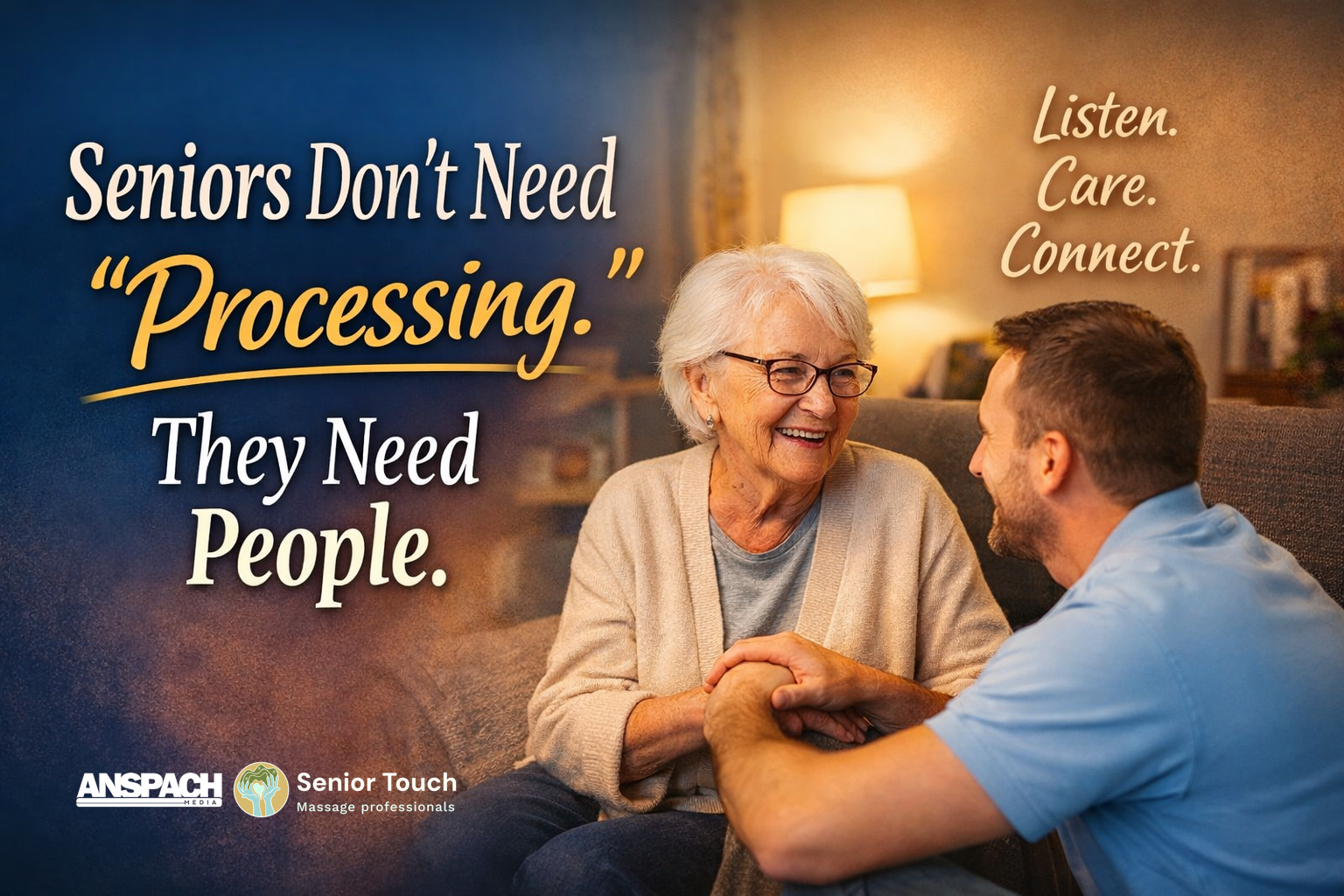
Seniors Don’t Need Processing, They Need People
(originally published on AnspachMedia.com)
I’ve had seniors in my life. You’ve had seniors in your life. And if you’re lucky enough to still have
them… you already know this:
Aging isn’t just physical.
It’s emotional.
It’s neurological.
And way too often, it’s lonely.
On Episode 383 of E-Heroes, Rob Anspach sat down with Forrest Richardson, founder
of Senior Touch in Massachusetts…an in-home service built around something the “system”
seems to forget:
Seniors are humans… not tasks.
Forrest put it perfectly: “We don’t have patients. We have clients.”
That sounds like a simple word swap until you realize how much power is packed into it.
A “patient” gets processed.
A “client” gets a say.
And when you’re dealing with the people who raised us, that difference matters.
Quiet Pain Is Still Pain
One of the biggest things Forrest talked about was what he calls quiet pain...the discomfort
seniors endure but rarely talk about.
Sometimes they don’t want to complain.
Sometimes they think it’s “normal.”
Sometimes they’ve been ignored so many times they stop bringing it up.
And the sad part? Their doctors may never hear it. Their family may never hear it. But the
moment someone shows up and actually listens… it comes out.
Not because it’s dramatic.
Because it’s real.
Healing Starts Before the Hands
Senior Touch doesn’t walk into a home and start “doing a protocol.”
They sit down. Look the client in the eye. Talk like a neighbor.
How’s your day?
How’s your week?
How’s your year?
What kind of mood are you in?
Because if someone doesn’t feel safe, nothing else matters.
Forrest explained that many seniors live with trauma…falls, fear of falling again, being handled
roughly in facilities, being rushed, being treated like they’re in the way.
So Senior Touch meets people where they are…literally. Recliner, wheelchair, couch, bed,
hospital bed.
No performance. No “host mode.” No pressure.
Just care.
Gentle Doesn’t Mean Weak
There’s a misconception that massage has to be brutal to “work.”
Pfft.
For aging bodies, rough isn’t therapeutic…it’s a liability.
Forrest explained why their approach is gentle, intentional, and client-led. They’ll work
through clothing, towels, blankets…whatever helps someone feel comfortable and in control.
Because relaxation must happen before healing can begin.
And when the nervous system settles down, the body finally gets a chance to do what it was
designed to do: recover.
The Difference Between Care and Caring
This part hit me.
Forrest described how many services come in and do the “care” checklist…vitals, paperwork,
drop-and-go visits, microwave meals.
But caring? That takes presence. Eye contact. Listening. Respect. Time.
And sometimes, that one hour of real human connection can change the entire day…especially
for clients with dementia, anxiety, depression, Parkinson’s, and Alzheimer’s.
When someone feels seen, they soften.
When they soften, they heal.
If You’ve Got a Senior in Your Life…
…this episode is worth your time.
Not because it’s flashy.
Because it’s honest.
And because the people who raised us deserve more than a hallway chair and “we’re too busy.”
They deserve dignity.
Learn more at SeniorTouchMP.com.
And even if you’re not in Massachusetts, Forrest said to call anyway…he’ll help however he can.
